Get Accurate Results: Dogs vs. Humans in Bed Bug Detection

By Yemi Aina, Tristate Bedbug Dogs
The battle against bed bugs has intensified as more homeowners and businesses search for effective detection methods. Two primary approaches emerge in this struggle: canine detection and human visual inspection. This article delves into the strengths and weaknesses of each option, providing insights into their accuracy, effectiveness, and reliability. Understanding the subtle nuances between these methods is crucial for determining which one is more suitable for your needs. Additionally, we will explore the financial implications of choosing canine inspections in the Tri-State area and the seamless integration of eco-friendly treatments following detection. By the end, readers will know the distinct advantages of each method and how to make informed decisions when it comes to bed bug problems.
What Are the Key Differences Between Canine Bed Bug Detection and Human Inspection?
Canine bed bug detection and human inspection represent two distinct methodologies in pest management. Canine inspections utilize specially trained dogs with acute olfactory senses to seek out bed bugs, while human inspectors rely on visual assessment. The effectiveness of these methods varies significantly due to their underlying mechanics and implementation strategies.
Tristate Bedbug Dogs, a leader in this field, emphasizes the value of K9 inspections. Dogs can detect the scent of bed bugs and their eggs with remarkable precision, often uncovering hidden infestations that human eyes might miss. Additionally, studies suggest that dogs exhibit superior detection rates, solidifying their role as invaluable assets in pest management.
Bed Bug Detection Technologies: Canines vs. Visual Inspection
Visual inspections are commonly used and depend on identifying live bugs, exuviae, or fecal droplets. Visual inspections are inexpensive, but they are time-consuming and unreliable when only a few bugs are present. Use of a dog to detect bed bugs is gaining in popularity, but it can be expensive, may unintentionally advertise a bed bug problem, and is not foolproof.
Bed bug detection: current technologies and future directions, MF Feldlaufer, 2013
What Are the Limitations of Human Visual Bed Bug Inspections?
Human visual inspections, while useful, have various inherent limitations. One of the primary drawbacks includes the potential for missed signs of infestation, particularly in hard-to-reach areas such as behind wallpaper or beneath furniture. Inspectors may overlook faint signs or inaccurately assess an infestation’s scale due to varying levels of expertise and training.
Moreover, the accuracy of human inspectors can be affected by factors such as lighting conditions and fatigue. In contrast, trained detection dogs consistently identify infestations through their advanced scent discrimination abilities, providing a more reliable option. This highlights the necessity of canine inspections for thorough and accurate detection.
How Do Canine Detection Dogs Identify Bed Bug Infestations?
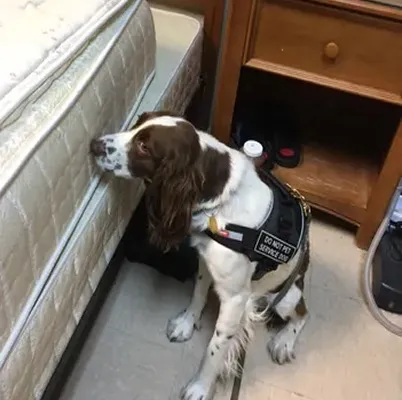
Canine detection dogs identify bed bug infestations primarily through their acute sense of smell. These specially trained dogs are capable of detecting the specific pheromones emitted by bed bugs and their biological components. The training process involves exposing dogs to various scents, where they learn to associate specific odors with a reward.
In addition to recognizing live bed bugs, trained dogs can detect the scent of bed bug eggs and feces, which are indicators of an active infestation. This breadth of detection ensures a comprehensive assessment, making K9 inspections an effective solution for property owners concerned about bed bugs.
Canine Accuracy: Detecting Live Bed Bugs and Eggs
Our study has shown that dogs can be trained to accurately locate live bed bugs and viable bed bug eggs.
Ability of bed bug-detecting canines to locate live bed bugs and viable bed bug eggs, PG Koehler, 2008
How Accurate Are Canine Bed Bug Detection Dogs Compared to Human Inspectors?
Studies show that canine detection dogs achieve detection accuracies as high as 95%, whereas human inspectors often fall short with accuracy levels ranging around 30-40%. This stark contrast is primarily due to the unique capabilities of dogs, which can differentiate between multiple scents and detect lower concentrations of pheromones.
The effectiveness of canine inspections is backed by extensive research, which consistently illustrates their ability to locate bed bugs that humans might easily overlook. This reliability reinforces the argument for utilizing K9 inspections in pest control strategies, especially for severe infestations where precision is paramount.
What Is the Success Rate of Bed Bug Detection Dogs in Professional Studies?
Professional studies have documented the success rates of bed bug detection dogs with consistency. A review of recent studies reveals that detection dogs effectively identify infestations in various environments, achieving an average success rate of over 90% in structured assessments.
Such success rates can be attributed to the extensive training these dogs undergo, which prepares them to work in diverse settings, including residential homes, hotels, and commercial properties. This adaptability further enhances the appeal of canine detection as a proactive measure against infestations.
How Does Combining Canine and Human Inspections Improve Bed Bug Detection?
The synergy of combining canine and human inspections can bolster the efficiency of bed bug detection efforts. While K9 units bring an unmatched ability to sniff out infestations, human inspectors can provide a thorough visual appraisal, analyzing the broader context surrounding potential infestations.
By integrating both methods, pest management professionals can maximize detection accuracy, ensuring no signs of bed bugs are overlooked. This multifaceted approach not only increases the likelihood of identifying hidden infestations but also streamlines the remediation process.
What Are the Cost Considerations for Canine Bed Bug Inspections in the Tri-State Area?
When evaluating cost considerations for bed bug detection, particularly in the Tri-State area, property owners often find that canine inspections can range from $300 to $600. In comparison, traditional visual inspections typically range from $100 to $300. Although K9 inspections may seem more expensive initially, they can lead to significant long-term savings by identifying infested areas before they spread.
The effectiveness of detection dogs typically allows for targeted treatments, potentially reducing the cost of extensive pesticide applications. Additionally, by preventing the escalation of an infestation, property owners may avoid considerable expenses associated with larger-scale pest control efforts.
How Do Eco-Friendly and Family-Safe Treatments Complement Canine Bed Bug Inspections?

Eco-friendly and family-safe treatments play a crucial role in pest management following detection. After a canine inspection, property owners can opt for treatments that utilize natural or non-toxic substances, ensuring safety for both humans and pets.
Common eco-friendly treatment options include steam cleaning, diatomaceous earth applications, and essential oil-based solutions. These methods tend to complement the initial findings of K9 inspections, allowing for effective eradication strategies that also minimize health risks.
What Are the Benefits of Eco-Safe Pest Treatments Following Detection?
Utilizing eco-safe pest treatments post-inspection offers numerous benefits. First, these treatments eliminate the toxins commonly associated with conventional pesticides, promoting a healthier environment for families and pets. Additionally, many eco-friendly methods have minimal impact on the surrounding ecosystem, supporting sustainability efforts in pest management.
Moreover, these treatments have shown efficacy against infestations without the risk of adverse side effects, fostering peace of mind for households concerned about chemical exposure. Choosing such options underscores the commitment to maintaining a safe living space while effectively addressing pest issues.
Are Canine Bed Bug Inspections Safe for Families and Pets?
Yes, canine bed bug inspections are entirely safe for families and pets. The dogs used in these inspections are trained to behave well in various environments, ensuring that they do not pose any risks during evaluations. It is crucial to maintain a calm atmosphere during the inspection, as this fosters a smooth experience for both the canine and those involved.
Additionally, this method does not involve the use of harmful chemicals during the inspection phase, making it a safe choice for homes with children or pets. This safety factor contributes to the growing popularity of canine-led inspections.
How Long Does a Typical Canine Bed Bug Inspection Take?
A typical canine bed bug inspection usually lasts between 30 to 60 minutes, depending on the size of the property and the complexity of the area being inspected. This time frame allows the trained detection dogs to thoroughly assess both obvious and hidden spaces where bed bugs might inhabit.
The efficiency of canine inspections means that property owners can quickly discern potential problems and begin remediation efforts without prolonged downtime. This expediency is a crucial advantage, especially in environments where infestations can escalate rapidly.
Can Canine Detection Dogs Identify Bed Bugs at All Infestation Stages?
Canine detection dogs can identify bed bugs at all stages of their life cycle. From eggs and nymphs to adult insects, these dogs possess the scenting capability to recognize the specific olfactory signatures tied to each stage. Early detection is vital for effective treatment, as it allows property owners to address infestations before they become severe problems.
The thorough training that detection dogs undergo ensures that they are capable of differentiating between life stages, offering a significant advantage in pest management. This ability allows for proactive intervention and a greater chance of long-term control over bed bug issues.